
Written for someone who never knew you
How to write your page for the person holding the phone: what they need first, what to leave out, and how to record a voice they can hear.
Who is actually reading
Most people write their page for their family. That is the wrong reader, and it is worth knowing why.
Your family already has the context. They know the names, the town, which uncle is which, and why the shop closed. Write for them and you will leave out everything they already have, which is everything a stranger needs.
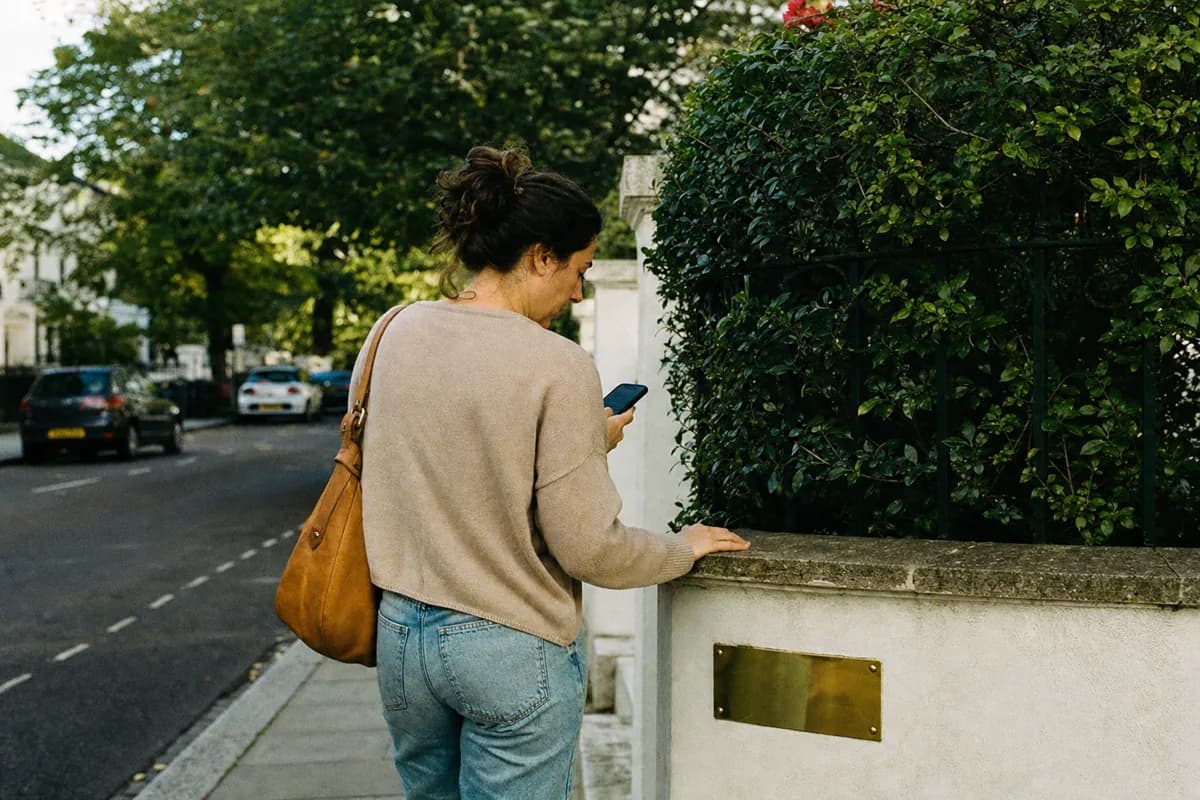
The stranger is real. Someone scans a mark on a bench, a frame, or a stone, and your page opens on their phone while they are standing there. Someone searches a name, a town, and a year on MyVTC, looking for a relative they never met. Someone finds you because they bought your house. They arrive knowing nothing, on a small screen, standing up, with very little patience.
Write for that person. Your family gets everything they need as a side effect.
The first three lines
Answer three things before anything else, near the top, in short sentences.
Who you were, in one line. Your name, and the thing you actually did with your days. Thirty-one years a midwife in the same town, and a beekeeper for the last fifteen of them. That shape. Not a job title, and not a description of your character.
Where and when. Places and years, plainly. Born here, lived there, worked there. A stranger cannot place you without dates, and a relative searching for you cannot confirm you are the right person without them.
What mattered. One or two sentences on what you cared about most, said in specifics rather than qualities. "I was never happier than on a boat" tells a stranger more than "I loved the outdoors."
If someone reads only those three and goes no further, they have still met somebody.
What to leave out
Leave out anything that reads as a summary of a personality. Kind, hard-working, always there for people. Every page says it, so no page means it. Show it with one thing you did and let the reader draw the conclusion.
Leave out the unexplained. Names with no relationship attached, places with no state, jobs with no year. A stranger cannot look them up and will simply move past.
Leave out anything you are keeping for one person only. That belongs in a private moment, or in a letter set for a date you choose. Your public page is the front door, and not everything belongs in the hall.
Leave out the things you would not want said aloud in a room. Once a page is public, assume it is read.
The order
Put the short "who I was" at the top. After that, let your life run in its own order, oldest first, in chapters: childhood, the working years, the years after that.
Order matters because meaning is cumulative. Reading forwards, a stranger sees the job come before the move that came before the person you met, and the shape appears on its own. Newest first hands them the ending with none of the story.
Not every year needs an entry. A handful of moments in the right order read better than a long list in no order at all.
Recording a voice they can hear
A voice does something the writing cannot. It is also the thing most often missed, because most people never think to keep one.
- Record indoors, with a door shut. Soft furniture helps. A running fridge or an open window will spoil an otherwise good recording.
- Hold the phone about a hand's width from your mouth, not against it.
- Say your name and the year at the start. In forty years that will matter more than it sounds now.
- Talk to one person, not to an audience. Picture the stranger on the bench and tell them the thing.
- Aim for a minute. Under two is right. If you stumble, keep going rather than starting again, because the stumble is part of how you talk.
Do not read your written moment out loud. Say it fresh, in different words. The written version and the spoken version doing slightly different jobs is the point.
The test
Give your page to somebody who knows nothing about you and ask them one question afterwards: what sort of person was that?
If they can answer in a sentence, and the sentence is true, the page is doing its job.